Choosing a pet collar is not simply a matter of color, price, or brand. The right choice affects comfort, identification, daily handling, and safety. For this reason, “How to pick a collar for different pets” should begin with the animal’s body shape, behavior, age, and living environment.
The American Pet Products Association’s 2023–2024 National Pet Owners Survey reported that approximately 66% of U.S. households owned a pet. That large market includes active dogs, indoor cats, small mammals, and companion birds. Each group needs a different approach. A strong nylon collar may suit a large dog that walks outdoors. It may feel heavy on a kitten. A cat collar should usually include a reliable breakaway feature. This helps reduce entanglement risks during climbing or exploration. Small pets need especially careful sizing. Two fingers should fit between the collar and the neck, without slipping over the head.
Industry guidance also supports regular product checks. The American Veterinary Medical Association emphasizes identification, supervision, and preventive care as parts of responsible pet ownership. Collar decisions should support those habits, not replace them. Check stitching, buckles, bells, and identification tags frequently. Replace damaged hardware immediately. Fit can change after grooming, weight gain, or growth.
China’s pet product manufacturers offer broad choices, including reflective fabrics, soft padding, adjustable closures, and customized tags. Yet more features do not always mean better protection. A reflective strip cannot fix poor sizing. A fashionable clasp may fail under sudden pulling. This guide compares collar materials, safety structures, and practical fitting methods for different pets. Some recommendations remain imperfect because every animal reacts differently. Careful observation still matters most.
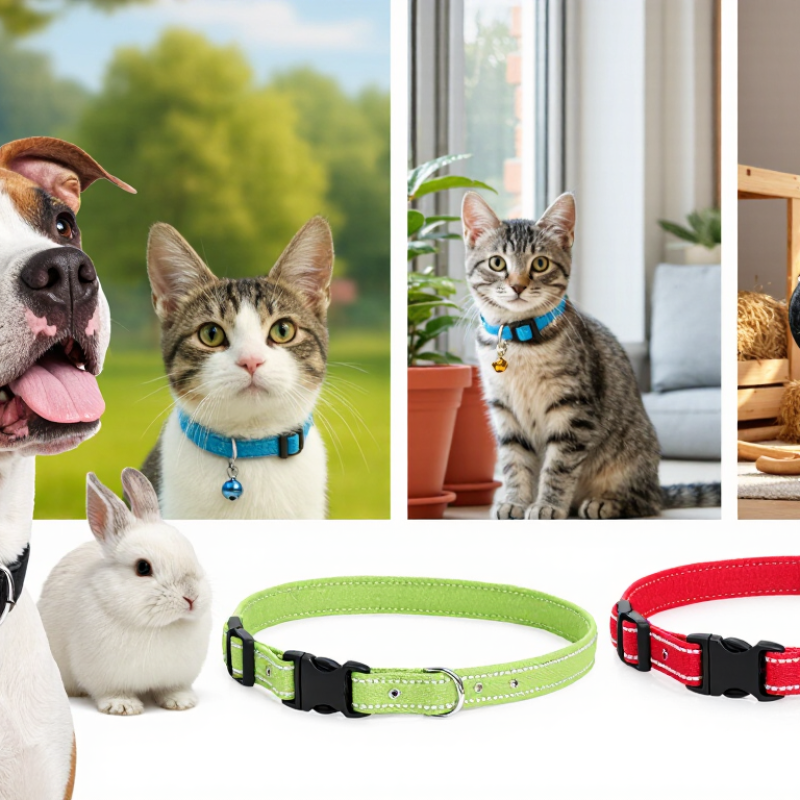
Choosing pet collar types requires more than matching colors or sizes. A flat nylon collar suits most dogs for daily walking, identification, and light training. Look for strong stitching, smooth edges, and a buckle that closes firmly. Larger dogs may need wider webbing and a reinforced D-ring. Measure the neck carefully, leaving room for two fingers.
Cats need different protection. A breakaway collar can release when it catches on a branch or household object. It should remain light and allow comfortable movement. Avoid heavy decorations, tight fits, and rough seams. For puppies, adjustable collars are practical because growth can make a perfect fit temporary. Check the collar every few days.
Small animals require extra caution. Rabbits usually need a properly fitted harness rather than a neck collar, because their necks are delicate. Birds should not wear ordinary collars; supervised identification bands require specialist guidance. I once judged fit by appearance alone, and the collar loosened after active play. That was a useful mistake. A collar should be checked after running, rain, and grooming. For outdoor use, reflective material can improve visibility, but it does not replace supervision. Test the clasp by hand, inspect the stitching, and replace any collar showing cracks or stretched fabric.
Choosing a collar starts with your pet’s neck, not its appearance.
Measure with a soft tape where the collar normally rests. For dogs, this is usually between the ears and shoulders. For cats, choose a higher, lighter fit. Leave room for two fingers between the collar and skin. That space should feel snug, never tight. Too loose is risky. A pet may slip free or catch the collar on furniture.
Measure twice.
Puppies and kittens grow quickly, so check the fit every week. A collar that worked last month may now press behind the ears. Adjustable collars help, but they still need regular inspection.
Look for redness, broken hairs, damp skin, or scratching. These signs suggest pressure or poor material contact. Lightweight, quick-release collars can help cats move safely indoors. Test the release gently and follow the product instructions.
Material also affects comfort.
Soft nylon may suit active dogs, while padded fabric can reduce rubbing on short-haired pets. Avoid heavy decorations for small animals.
I once judged a collar by its neat stitching and missed its stiff edge. Comfort matters more than appearance.
Let your pet walk, turn, and rest while wearing it. If the collar shifts toward the jaw or twists under the neck, adjust it or choose another size.
For dogs, a collar should balance strength, comfort, and easy adjustment. Measure the neck with two fingers between the collar and skin. A flat, soft-edged design can reduce rubbing during daily walks. Choose a secure buckle and a sturdy leash ring. Reflective stitching helps visibility near roads or dim parks. However, a very heavy collar may tire a small dog. I once selected one that looked durable but felt bulky after ten minutes. Appearance was not enough.
Cats need a different approach. A breakaway buckle can release when the collar catches on a branch or household object. The collar should remain light, smooth, and properly fitted. Two fingers should slide underneath without forcing the fabric. An identification panel can help, but it should not create a hard, dangling weight. Check the clasp and stitching weekly. Cats often hide discomfort well. That detail is easy to miss.
Small pets require extra caution. Rabbits, guinea pigs, and ferrets may have delicate necks and active bodies. A collar can become stressful or catch during movement, so a soft harness may be safer for supervised outings. Avoid sharp edges, loose decorations, and rough seams. Inspect the skin after each use. Red marks matter. Material quality also deserves attention: breathable fabric, washable surfaces, and reliable stitching support cleaner, longer use. My own judgment is still imperfect; the best choice depends on the animal’s size, behavior, and tolerance.
Key collar feature priorities for dogs, cats, and small pets
The 1–5 index reflects practical priority rather than market share: dogs generally need durable, adjustable collars; cats benefit most from lightweight breakaway designs and identification; small pets need lightweight, gentle, adjustable collars that reduce snagging and escape risks. A collar should allow about two fingers of space between the collar and the pet’s neck.
China Top Pet Collars: How to Pick One for Different Pets?
Choosing a pet collar requires more than attractive colors or low prices. For dogs, select a sturdy collar with smooth edges and reliable stitching. Active dogs may need wider support, while small dogs need lightweight designs. Cats should usually wear breakaway collars. This feature can reduce entanglement risks during outdoor movement. Rabbits and other small pets often need extra caution. A collar may irritate their delicate necks, so a harness can be safer.
Material affects comfort, safety, and durability. Soft nylon dries quickly and suits rainy walks or frequent washing. Leather feels comfortable but needs regular cleaning and conditioning. Coated fabrics resist moisture, although some pets dislike their texture. Check the buckle, D-ring, and stitching by hand. None should feel sharp, loose, or weak. I once underestimated buckle quality; that small detail can matter during a sudden pull. The collar should allow two fingers between the neck and the strap. Too tight causes rubbing. Too loose may slip away.
Tips: Measure carefully.
Check the fit weekly.
Inspect after active use.
Replace damaged collars promptly.
Introduce a new collar indoors first. Watch for scratching, redness, or unusual movement. A reflective strip can improve visibility in dim areas, but it cannot replace supervision. Consider the pet’s coat, neck shape, age, and daily habits. Puppies and growing animals need frequent adjustments. Even a durable collar eventually wears out, especially after water exposure, mud, or repeated pulling.
| Pet Type | Recommended Collar Material | Suggested Width and Fit | Safety Considerations | Comfort Features | Durability Requirements | Best Use Recommendation |
|---|---|---|---|---|---|---|
| Small Dog (under 10 kg) |
Lightweight nylon, soft polyester webbing, or flexible biothane-style coated webbing. | Approximately 10–15 mm wide. Leave enough room for two adult fingers between the collar and the neck. | Use a secure buckle, reflective stitching, and a rounded or smooth-edged D-ring. Avoid heavy accessories that can strain the neck. | Soft lining, low weight, flexible webbing, and a smooth adjustment area help reduce rubbing. | Look for reinforced stitching and corrosion-resistant hardware. Check regularly for fraying because smaller collars use lighter materials. | Choose a lightweight everyday collar with reflective details for walking in low-light conditions. |
| Medium or Large Dog (10–35 kg) |
High-density nylon, polyester webbing, or durable coated webbing with a soft edge. | Approximately 15–25 mm wide. The collar should be snug but allow two fingers to fit comfortably underneath. | Use a load-rated metal D-ring, a strong buckle, and reflective elements. A collar should not be used as a restraint if the dog pulls heavily unless it is specifically designed for that purpose. | Padding, breathable lining, and a stable adjustment system help prevent pressure points during walks. | Prioritize bar-tack stitching, strong webbing, rust-resistant metal, and resistance to moisture and abrasion. | Select a reinforced, weather-resistant collar for regular walking, training, and outdoor activity. |
| Puppy | Soft nylon or lightweight polyester with flexible construction. | Use a narrow, lightweight design and check the fit frequently because puppies grow quickly. Maintain a two-finger clearance. | Avoid loose collars that can slip over the head and avoid heavy tags. Inspect the collar after chewing or rough play. | Choose soft edges, low weight, and a simple adjustable design that does not restrict normal neck movement. | Use durable but replaceable materials. Recheck the collar at least weekly and replace it when it becomes tight or damaged. | Use a lightweight adjustable collar and upgrade the size as the puppy grows. |
| Cat | Lightweight nylon or soft polyester with a smooth surface. | Usually about 8–12 mm wide. The collar should allow two fingers to fit underneath without being loose enough to catch on objects. | A breakaway buckle is strongly recommended so the collar can release if it becomes snagged. Reflective material can improve visibility outdoors. | Use a lightweight design with smooth edges and minimal attachments. Avoid bulky or noisy decorations. | Choose strong, flexible webbing, but ensure the breakaway mechanism releases correctly. Inspect the buckle, stitching, and adjustment regularly. | Choose a lightweight breakaway collar for identification and visibility, especially for outdoor cats. |
| Rabbit | Very soft nylon, soft fabric webbing, or a properly fitted harness rather than a standard collar. | If a collar is used, it must be extremely lightweight and loose enough for normal breathing, but not loose enough to catch. A harness is generally safer for supervised walking. | Rabbits have delicate necks and spines. Never attach a lead to a collar, and avoid collars that can tighten or become caught. | Soft, flexible, lightweight materials reduce fur matting and skin irritation. Allow the rabbit to adjust gradually to wearing it. | Inspect for chewing, loose threads, and weakened fasteners before every use. Replace immediately if any damage is visible. | Prefer a well-fitted rabbit harness for supervised outdoor activity instead of a conventional collar. |
| Ferret | Thin, lightweight nylon or soft fabric with a smooth finish. | Use a small adjustable fit that allows two fingers under the collar while preventing the ferret from backing out. | A quick-release or breakaway fastening is preferable. Do not attach a heavy leash or allow unsupervised use because ferrets can squeeze through small spaces. | Choose a narrow, flexible design with no sharp edges, bulky charms, or stiff components. | Check frequently for chewing, stretched fabric, and damaged buckles. Replace the collar when the fit changes or materials weaken. | Use only for brief, supervised identification or outdoor sessions, with frequent fit checks. |
| Water-Loving Dog | Quick-drying coated webbing, waterproof synthetic material, or mildew-resistant nylon. | Choose a width appropriate to the dog’s size and maintain a two-finger fit. Avoid collars that remain tight after becoming wet. | Use corrosion-resistant hardware and reflective details. Rinse away salt, chlorine, mud, and sand after use. | Use smooth, non-absorbent surfaces that do not stay wet against the skin. Check for trapped moisture beneath the collar. | Prioritize resistance to water, UV exposure, abrasion, and corrosion. Dry the collar and inspect the stitching regularly. | Select a quick-drying, odor-resistant collar designed for repeated wet conditions. |
| Strong Puller or Working Dog | Heavy-duty nylon or polyester webbing with reinforced construction and padded contact areas. | Use a width suitable for the dog’s neck and body size. A professional trainer should assess equipment for dogs that pull strongly. | Check the buckle and D-ring for secure attachment. A collar should not be used to apply excessive pressure to the airway; consider a properly fitted harness when appropriate. | Padding, load distribution, and smooth edges can reduce rubbing during controlled activity. | Look for multiple reinforcement points, high-quality stitching, abrasion resistance, and metal hardware that does not bend under normal use. | Use a reinforced collar for identification and controlled handling, while selecting a suitable harness for sustained pulling forces. |
Choosing among China-made pet collars requires more than comparing prices. The APPA 2023–2024 National Pet Owners Survey reports 65.1 million U.S. households own dogs and 46.5 million own cats. That range explains why one collar design cannot fit every pet.
Compare the size chart, adjustment range, webbing width, and buckle shape. Measure the neck with two fingers of space.
For a strong dog, inspect reinforced stitching and the lead attachment point. For a cat, consider a lightweight, quick-release buckle.
Small details matter.
Ask the supplier for material specifications, batch records, and test results for tensile strength, colorfastness, and hardware corrosion. ISO 24153:2022 highlights the value of reliable sampling practices, so request samples from the actual production batch, not only a polished showroom piece.
Check whether printed measurements match the physical collar. They sometimes do not. Examine rough edges, loose threads, sharp metal, and chemical odors under ordinary indoor light. A collar should remain secure during controlled pulling, yet release safely when the design requires it.
Never trust a single photograph.
I have found attractive samples with weak stitching, and that mistake is easy to repeat. A documented inspection plan improves reliability, but no checklist catches every failure. 马会赛车
A flat nylon collar usually works for walking, identification, and light training. Choose smooth edges, strong stitching, and a firm buckle.
Leave space for two fingers between the collar and skin. Larger dogs may need wider material and a reinforced leash ring.
Reflective stitching improves visibility near roads or dim parks. It does not replace supervision, careful handling, or attention to traffic.
A breakaway buckle can release if the collar catches on a branch or household object. The collar should stay light and comfortable.
Slide two fingers underneath without forcing the fabric. Inspect the clasp and stitching weekly. Cats often hide discomfort well.
An adjustable collar is practical because puppies grow quickly. Check the fit every few days and after active play.
Rabbits usually need a properly fitted harness instead. Their necks are delicate, and sudden movement can cause stress or injury.
A soft harness may be safer during supervised outings. Avoid sharp edges, loose decorations, and rough seams. Inspect the skin afterward.
No. Ordinary collars are unsuitable for birds. Identification bands require specialist guidance and careful supervision.
Replace it when you see cracks, stretched fabric, damaged stitching, or a weakened clasp. Appearance alone can mislead. Fit matters most.
Choosing the right collar starts with understanding your pet’s species, size, behavior, and daily activities. How to pick a collar for different pets depends on matching the collar type to the animal: adjustable flat collars may suit most dogs, lightweight breakaway designs are often safer for cats, while small pets need soft, narrow options that will not restrict movement. Measure the neck carefully, leaving enough room for comfort without allowing the collar to slip over the head. Consider features such as secure closures, identification space, reflective details, and adjustable fittings.
Material and construction also matter. Soft, breathable fabrics can reduce irritation, while strong stitching and durable hardware support active pets. Before buying China-made pet collars, compare measurements, materials, safety testing information, customization options, packaging, and quality consistency. A suitable collar should balance comfort, security, durability, and practical use, helping pets wear it safely during everyday activities.

Canna Pet Supplies