A collar can look right on the shelf and still rub, slip, or feel tight once your pet moves. That is why How to measure my pet for a collar is a practical question, not just a sizing task. A soft tape measure, a calm pet, and a little patience make a better start. Measure around the neck where the collar normally rests. Keep the tape close to the fur, but do not pull it snug. Leave room for breathing and ordinary movement.
Veterinarian and pet-care author Dr. Marty Becker is associated with a useful fitting rule: “You should be able to fit two fingers between the collar and your pet’s neck.” Treat that as a check, not a substitute for the manufacturer’s size chart. A fluffy coat can hide a loose fit. A growing puppy can outgrow a collar sooner than expected. Check the fit again after fastening it, and watch how your pet walks, eats, and turns its head. Too tight? Loosen it. Too loose? It may slip over the head. Small details matter. Measuring can feel awkward at first, and a wiggly pet may not cooperate perfectly. That is normal. Repeat the measurement calmly, compare it with the brand’s guidance, and remember that no single number guarantees a comfortable fit.
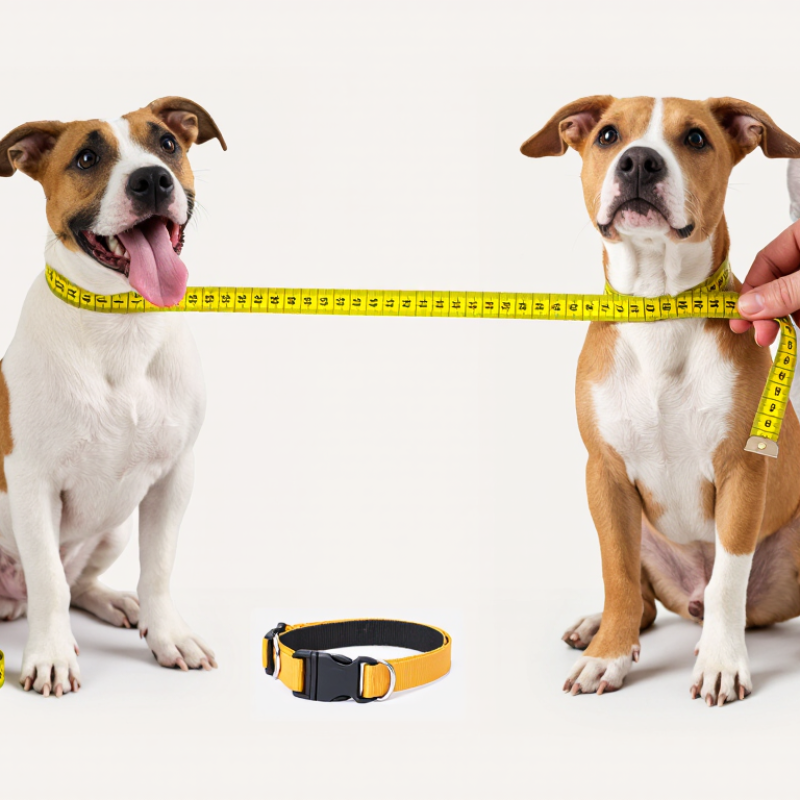
Choose a soft, flexible measuring tape that follows your pet’s neck without digging into the fur. A rigid ruler is awkward around a moving animal. If you do not have a tape, use a non-stretchy piece of string, then measure it against a ruler. Keep a pen and paper nearby. Write it down. A phone note works too, but it can be easy to lose your place while handling a wiggly pet.
Pick a quiet spot with good light, and let your pet settle before measuring. A helper can offer a small treat or gently steady your pet’s shoulders. Move thick fur aside, but do not press the tape into the skin. Keep it level around the neck, where the collar will sit, and record the measurement in inches or centimeters. Check it twice; an eager pet can turn a careful measurement into a guess. I would not rely on an old collar as a substitute, since its fit and stretch may differ. When comparing sizes, follow the collar maker’s fitting guidance and check that the finished collar allows comfortable movement. A two-finger check can help, though it is not a reason to ignore signs of rubbing or discomfort.
| Tool or preparation | How to use or prepare | Helpful check |
|---|---|---|
| Flexible, non-stretch measuring tape | Wrap the tape around the middle of the neck, where the collar will normally sit. Keep it level and comfortably snug without pulling it tight. | Read the measurement where the tape meets its starting point. Avoid using elastic or stretchable tape. |
| String and a ruler | If you do not have a flexible tape, wrap a non-stretch string around the neck, mark where it meets, then lay it flat and measure it with a ruler. | Do not stretch the string or leave it loose while marking. Measure the marked length rather than estimating. |
| A calm, comfortable pet | Choose a quiet moment when your pet is standing or sitting naturally. Let them sniff the measuring tool before you begin. | Pause if your pet becomes worried or restless, and try again when they are relaxed. |
| Helper or treats | A second person can gently keep your pet settled while you measure. Small treats can help create a positive experience. | Keep handling gentle; do not restrain the neck or force your pet to stay still. |
| Coat check | Move long or thick fur aside and position the tape against the neck without compressing the skin or coat excessively. | For a dense coat, check the collar fit again after putting it on; coat thickness can affect comfort. |
| Measurement record | Write down the neck measurement and the date. If the result seems unexpected, measure again and compare the readings. | Use the collar maker’s size chart to select a size; sizing ranges vary between collars. |
| Fit check after choosing a collar | Once fastened, check that the collar sits comfortably and is not tight. A common fit check is to see whether two fingers can fit between the collar and the neck. | The collar should not restrict breathing, rub, or slip over the head. Recheck fit regularly, especially as a young pet grows. |
| Collar type and safety | Choose a collar intended for your pet and follow its fitting instructions. For cats, use a properly fitted breakaway collar designed to release if caught. | A collar’s size and safety features are separate considerations; confirm both before use. |
Use a soft, flexible measuring tape. A piece of non-stretchy string or paper can work if you measure it against a ruler.
Place it where the collar will rest, usually above the shoulders and below the jaw. Keep it level around the neck.
Let it touch the fur without pressing into the skin. Thick coats can make this tricky.
Let your pet stand or sit comfortably, with its head in a natural position. Pause if it starts moving.
Yes. Take two readings and write them down; small differences happen when the tape slips.
Ask someone to gently steady its shoulders or offer a small treat. Take your time.
Slide two fingers beneath the collar without forcing them. It should stay secure when your pet moves.
Watch for rubbing, coughing, or fur caught underneath. Remove or adjust it if your pet seems uncomfortable.
It may not match the current fit or stretch. Measuring again is more reliable, though it takes a little patience.
Measuring your pet for a collar is a simple way to help ensure a secure, comfortable fit. Before you begin, gather a flexible measuring tape and keep your pet calm and standing naturally. Find the base of the neck where the collar will sit, rather than measuring high up near the head. Wrap the tape around this spot without pulling it tight, and note the neck circumference. If you do not have a flexible tape, use a piece of string and then measure it against a ruler.
When deciding how to measure my pet for a collar, remember to leave enough room for comfort. A useful check is to make sure you can slip two fingers between the tape and your pet’s neck without forcing them in. Use the resulting measurement to compare with the collar’s sizing guide, choosing a size that accommodates the measurement and allows adjustment. Check the fit again after putting the collar on: it should stay in place without rubbing, pinching, or feeling loose enough to slip off.

 Canna Pet Supplies