Choosing the right collar for your pet can feel overwhelming. Many pet owners often wonder, “What size collar does my pet need?” A well-fitted collar is crucial for both comfort and safety. An ill-fitting collar can cause discomfort or even harm your pet. Consider your pet’s breed, size, and age. Puppies rapidly grow, which makes collar selection even trickier. A collar that fits poorly might slip off or choke your pet. It’s essential to measure correctly. Use a soft tape measure around your pet’s neck. Leave enough space for two fingers. It’s not just about size; material matters too. Different fabrics affect comfort levels. Some pets may dislike certain materials, leading to irritation. Experimenting with options can help find the best match. In some cases, you might buy multiple collars before you find the right one. Though it can be frustrating, ensuring safety and comfort is worthwhile. Finding a collar that fits correctly might take time, but it's a vital step in responsible pet ownership.
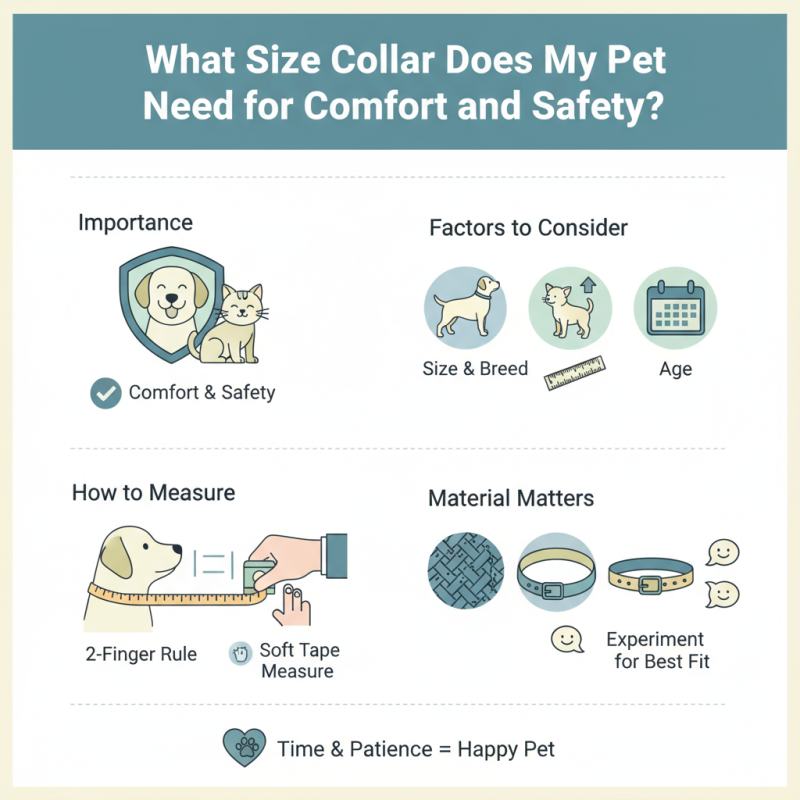
Choosing the right collar for your pet is crucial for their comfort and safety. A poorly fitting collar can cause discomfort and even injury. According to a recent survey by the American Pet Products Association, nearly 30% of pet owners reported buying the wrong collar size. This highlights the need for education on collar fitting. Collars should fit snugly but not too tight. You should be able to slide two fingers between the collar and your pet’s neck. If it’s too loose, your pet could escape. Conversely, a collar that is too tight can lead to chafing or breathing issues. An estimated 15% of pets require a visit to the vet due to collar-related injuries, emphasizing the importance of a proper fit. Tips: Always measure your pet's neck before purchasing a collar. If your pet is still growing, consider an adjustable collar. Regularly check the fit, as pets can gain or lose weight. Be aware of your pet’s behavior. If they seem distressed or constantly paw at their collar, it may need adjusting. Prioritizing proper collar size not only promotes safety but can significantly enhance your pet’s overall happiness.
Measuring your pet’s neck is crucial for finding the right collar. A collar that’s too tight can cause discomfort. One that’s too loose may slip off or get caught. Start with a flexible measuring tape. Wrap it around your pet's neck where the collar will sit. Ensure it’s snug but not tight. Note the measurement down.
Here are some tips for better accuracy:
- Use two fingers to check the fit while measuring.
- Measure during a calm moment. Pets can be wiggly, making it hard to get a precise size.
- Repeat the measurement a couple of times to confirm accuracy.
Keep in mind, collars can stretch over time. Regularly check the fit. The collar should allow for natural movement without being restrictive. Avoid buying based solely on breed sizes; each pet is unique. If you’re between sizes, go for the larger size to ensure comfort.
This bar chart shows the recommended neck sizes for different collar sizes, ensuring comfort and safety for your pet. Accurate measurements are essential to prevent discomfort and ensure a secure fit.
When choosing a collar for your pet, size matters significantly for comfort and safety. A proper fit ensures that your pet feels secure and can move freely without restriction. Collars come in various styles and sizes, including flat collars, martingale collars, and harnesses. Each type has its unique fitting guidelines, and pets may require different sizes for each style. Measure around your pet's neck to find the correct size. Keep in mind that some pets have specific needs. For instance, breeds with thick fur might need a larger collar size to accommodate their coat. Watch out for signs of discomfort. If a collar is too tight, your pet may show signs of choking. Conversely, a collar that is too loose can slip off easily. It can be frustrating to find the right size, especially with growing pets. Pay attention to adjustable collars, as they offer flexibility. However, certain types, like martingale collars, might require more careful adjustments. Don't hesitate to try multiple sizes before settling on one. Adjusting the collar frequently is not always possible, so be proactive. The right choice can lead to happier walks and safer outings for both you and your pet.
When selecting a collar for your pet, the material plays a crucial role in their comfort and safety. For instance, nylon collars are popular due to their durability and lightweight nature. However, they can cause friction against the skin, leading to irritation, especially in long-haired breeds. A study from the American Veterinary Medical Association indicates that about 33% of pet owners report skin irritation from poorly designed collars.
Leather collars offer a classic alternative. They are strong and tend to last longer. Yet, leather can become stiff over time, potentially causing discomfort. A survey from PetSafe found that 25% of pet owners believe leather collars break in well, but not all pets adjust to them quickly.
Soft materials like neoprene or padded fabrics are excellent choices for comfort-focused owners. These materials provide a gentle touch while still being robust. Nonetheless, these options might not be as resistant to wear and tear. Ultimately, when picking a collar, consider your pet’s specific needs and how they react to different materials. Adequate research and testing may lead to better comfort and safety for your furry friend.
Finding the right collar size for your pet is crucial for their comfort and safety. A well-fitted collar should be snug but not restrictive. You should be able to fit two fingers comfortably between the collar and your pet's neck. If the collar is too loose, it can slip off. If it's too tight, it can cause discomfort or injury.
When selecting a collar, take precise measurements. Use a measuring tape to find the circumference of your pet's neck. If your pet has a fluffy coat, you might need to measure a bit tighter. Check the collar frequently as your pet grows or if their weight changes. This is especially important for young pets.
Tips for Adjusting and Fitting a Collar Properly: Always ensure the collar is adjusted properly before taking your pet out. A collar that rubs against the skin can lead to irritation. You might need to make tiny adjustments until it feels just right. Pay attention to your pet’s behavior. If they seem uncomfortable or are scratching, it might be time to reassess the fit.
: The product aims to enhance your daily activities. It improves efficiency and provides convenience.
Anyone looking to simplify tasks can benefit. Students, professionals, and even busy parents might find it helpful.
Yes, it includes user-friendly controls. There are also customizable settings to fit individual preferences.
Some users may face initial challenges. However, most find it easy to adapt with practice.
This product is versatile. It works well in homes, offices, or while traveling.
Users often overlook basic features. They might not utilize all settings that enhance performance.
Sustainability is considered in its design. However, there’s always room for improvement in eco-friendliness.
Consult the troubleshooting guide. If problems persist, contacting customer service is advised.
A limited warranty is provided. This varies based on the product, so check for specifics.
Feedback can be shared through various channels. User experiences help improve future products.
Choosing the right collar for your pet is essential for their comfort and safety. When considering "what size collar does my pet need," it's crucial to accurately measure your pet's neck to ensure the collar fits properly. A collar that is too tight can cause discomfort, while one that is too loose can lead to loss or accidents. Various types of collars are available, each with different size variations and materials, impacting both fit and comfort.
In addition to size, the choice of collar material plays a significant role in your pet’s overall experience. It's important to select a material that suits your pet's lifestyle and skin sensitivity. Once you have chosen a collar, proper adjustments are key to ensure it fits snugly but not too tightly. By following these guidelines, you can determine the ideal collar size that promotes safety and comfort for your furry friend.

Canna Pet Supplies