China’s pet harness industry is growing with wider demand for safer, more comfortable walking equipment. The American Pet Products Association reported that United States pet spending reached $152 billion in 2024. This growth reflects stronger spending on daily care, mobility, and animal welfare. It also raises an important buying question: What are benefits of a good pet harness?
A well-designed harness spreads walking force across the chest and shoulders. It can reduce direct pressure on a dog’s throat, especially when the animal pulls suddenly. The right fit may also improve control near traffic, bicycles, or crowded parks. However, a harness is not automatically safe. Poor stitching, stiff webbing, or an incorrect size can cause rubbing behind the front legs. A loose model may also let an anxious dog escape. Small details matter.
Veterinary behaviorist Dr. Karen Overall has emphasized a humane principle: “Equipment should not cause pain, fear, or distress.” This guidance supports careful product evaluation. Buyers should examine breathable materials, smooth edges, secure buckles, and adjustable chest straps. Independent testing is valuable, but supplier claims still require verification. The European Pet Food Industry Federation’s market reports show continued attention to responsible pet care across Europe. Yet data alone cannot prove a harness suits every breed. A short-nosed dog, a growing puppy, and a strong adult dog have different needs. China’s top manufacturers should therefore compete on fit testing, material traceability, and quality consistency, not appearance alone. A bright color helps visibility. It does not replace comfort.
China’s role as a pet harness manufacturing hub comes from its dense network of textile mills, buckle makers, sewing workshops, and packaging suppliers. When these operations are located within the same region, factories can source nylon webbing, mesh padding, and metal fittings with fewer delays. That proximity matters.
Manufacturers also offer varied production capacity, from small sample runs to larger orders. Experienced teams can adjust strap width, stitching patterns, and padding after fit tests. On a worktable, this may mean checking whether a seam rubs near a dog’s front leg or whether a buckle is difficult to release. Practical testing is important. Yet a large supplier base does not guarantee consistent quality. Materials and workmanship can vary, so buyers need clear specifications and repeatable inspections.
Tips: Request samples made with the intended materials, and check stitching, adjusters, and buckle operation by hand. Ask how measurements are recorded between production batches. Keep notes from fitting tests; one small gap in the process can lead to an uncomfortable harness.
China’s pet accessory sector is expanding with rising demand for safer, better-fitted products. The American Pet Products Association reported that U.S. pet industry spending reached $147 billion in 2023. This growth makes supplier selection more demanding. A serious buyer should examine factory experience, material traceability, testing records, and export history.
Do not judge a manufacturer by its catalog alone. Request production photos, sample measurements, stitching details, and load-test results. Check whether the factory uses consistent webbing, corrosion-resistant buckles, and skin-friendly lining. ISO 9001 certification can support process control, but it does not guarantee product quality. Independent inspection remains valuable. Ask for records covering failure rates, corrective actions, and batch consistency. Some suppliers may provide impressive samples, yet their mass production can differ. That gap deserves attention.
Tips: Compare at least three factories. Visit one facility if possible. Verify business licenses through reliable Chinese registration channels. Ask for a live video inspection of cutting, sewing, and packing lines. Review third-party testing based on your target market’s requirements. The Global Market Insights pet accessories market report projects continued growth through 2032, increasing pressure for flexible production and dependable delivery. Still, market reports are broad estimates, not factory-level proof. My practical view is simple: treat every claim as unverified until documents, samples, and repeated orders support it. Oversight costs time. Defects cost more.
| No. | Evaluation Dimension | Potential Buyer Benefit | Evidence to Request or Verify | Suggested Weight | Score |
|---|---|---|---|---|---|
| 1 | Product design and fit | A well-designed harness can support a more secure, comfortable fit and reduce fit-related returns. | Review size charts, adjustment range, measurement instructions, sample fit, and design revisions for different body shapes. | 15 points | ___ / 15 |
| 2 | Materials and component traceability | Clear material specifications make it easier to manage consistency, sourcing, and product claims. | Ask for specifications for webbing, lining, thread, buckles, and rings, plus supplier or batch records where available. | 13 points | ___ / 13 |
| 3 | Strength and durability testing | Testing helps identify weak seams, hardware failures, or other durability concerns before shipment. | Request relevant test reports or a documented test plan for seams, closures, and attachment points. Agree on acceptance criteria for the product and intended use. | 12 points | ___ / 12 |
| 4 | Quality-control process | Documented inspections can improve batch consistency and make defects easier to investigate. | Check for written inspection procedures, sample approval records, defect handling, and final inspection documentation. | 12 points | ___ / 12 |
| 5 | Sampling and customization | Sampling and customization can help buyers validate fit, materials, colors, and packaging before production. | Confirm sample lead time, revision process, available customization options, and whether production will follow the approved sample. | 10 points | ___ / 10 |
| 6 | Production capacity and lead-time planning | Realistic capacity planning can support dependable replenishment and reduce schedule surprises. | Ask for capacity by product type, current production schedule, order minimums, and a written timeline that separates sampling, production, and dispatch. | 10 points | ___ / 10 |
| 7 | Compliance and product documentation | Relevant documentation helps buyers assess market-specific requirements and substantiate material or safety claims. | Request current, product-relevant documents and verify their scope, issuing party, and applicability to the destination market. Do not assume one certificate covers every product or market. | 8 points | ___ / 8 |
| 8 | Communication and issue resolution | Responsive communication can make approvals, changes, and corrective actions easier to coordinate. | Evaluate response clarity, named points of contact, written change confirmations, and the process for handling complaints or nonconforming goods. | 8 points | ___ / 8 |
| 9 | Packaging and shipping preparation | Suitable packaging and accurate shipment records can help protect goods and simplify receiving. | Confirm packaging specifications, carton details, labeling needs, packing-list accuracy, and willingness to follow buyer shipping instructions. | 7 points | ___ / 7 |
| 10 | Transparent quotation and order terms | Clear commercial terms make it easier to compare offers and control the full cost of an order. | Check itemized pricing, order minimums, tooling or sample charges, payment terms, quotation validity, and the agreed delivery basis. | 5 points | ___ / 5 |
| Total suggested evaluation weight | 100 points | ___ / 100 | |||
Scoring note: The weights are an illustrative buyer evaluation model, not industry-wide statistics or a ranking of manufacturers. Set product-specific acceptance criteria before comparing suppliers.
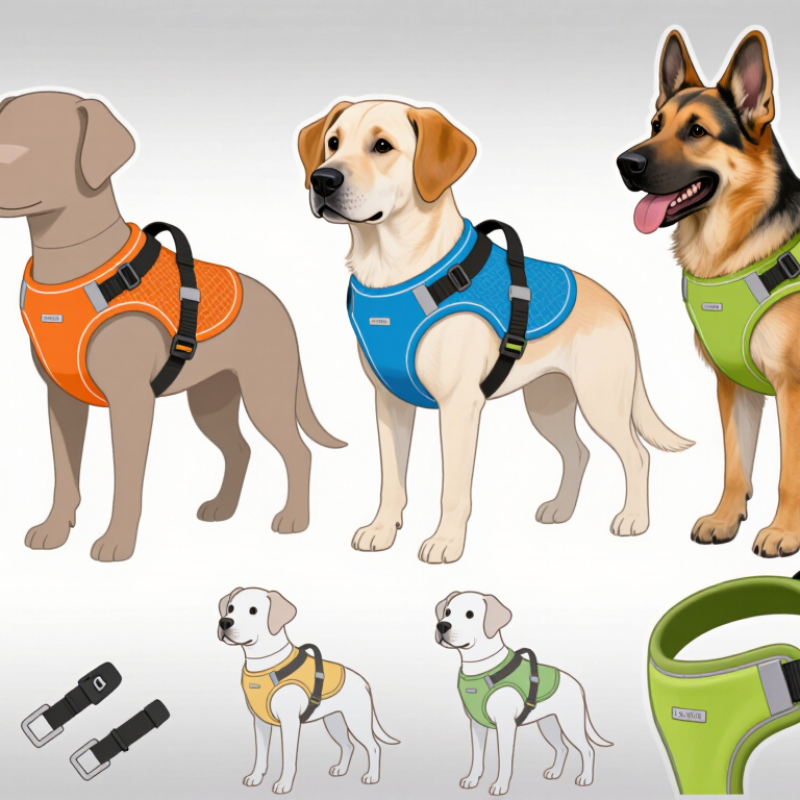
Chinese manufacturers produce several pet harness types for different sizes, temperaments, and walking habits. Step-in harnesses suit small dogs and nervous pets because they reduce head handling. Vest harnesses spread pressure across the chest and offer a soft, stable fit. No-pull designs usually include a front attachment point, helping guide strong dogs without tightening around the neck. Adjustable Y-shaped harnesses allow freer shoulder movement during daily walks. Some factories also make lightweight mesh harnesses for warm climates and reflective versions for evening visibility.
Material choice changes comfort and service life. Common options include breathable polyester mesh, nylon webbing, padded lining, and corrosion-resistant metal rings. In practical product checks, I look at the stitching near the D-ring first. That area receives repeated pulling. A good sample should keep its shape after adjustment, while buckles should close with a clear click. However, appearance can mislead. A soft harness may still rub behind the front legs. A strong strap may feel too stiff for a small puppy. Manufacturers often provide size charts, pull tests, colorfastness checks, and sample approvals for buyers. Yet measurements are not always consistent between suppliers. Responsible sourcing requires testing the finished harness on different body shapes, not relying only on factory data. A better fit can still need revision.
Chinese manufacturers commonly produce several harness designs for walking control, comfort, visibility, and training. The chart compares the typical suitability of each design for key user needs on a relative 1–5 scale, based on the functional characteristics of the harness construction rather than company or brand sales data.
Step-in harnesses are easy to put on, vest harnesses distribute pressure across the chest, no-pull designs help reduce forward pulling, H-style harnesses provide adjustable control, and reflective harnesses improve visibility in low-light conditions.
Pet harnesses can offer dogs and cats safer, more comfortable movement when fitted correctly.
The APPA 2023–2024 National Pet Owners Survey estimates that 66% of U.S. households own a pet, representing about 86.9 million homes. This scale makes everyday walking equipment important, not decorative.
A harness spreads leash force across the chest and shoulders instead of concentrating it on the neck. Veterinary guidance commonly favors this design for dogs that pull, cough, or have sensitive airways. It can also improve handling near roads, crowded sidewalks, and unfamiliar environments.
Still, a harness is not automatically safer. A loose fit may cause rubbing, while a poor design can restrict shoulder movement.
Two fingers should fit beneath the straps, but the harness should not rotate around the body.
Cats can benefit too.
A lightweight, escape-resistant harness supports supervised outdoor exploration and controlled exercise. The American Pet Products Association reports that millions of U.S. households keep cats, yet many cats dislike sudden restraint. Short indoor practice sessions work better than forcing a first outdoor walk.
Watch for flattened ears, freezing, or rapid breathing. These signs mean the session is too difficult.
I would also avoid leaving a harness on unattended. Product testing should examine stitching, buckle strength, adjustability, and skin contact after repeated use.
Comfort remains easy to claim and surprisingly hard to prove.
China Top 10 Pet Harness Manufacturers: What Are the Benefits?
How to Choose the Right Chinese Pet Harness Supplier
A large market does not guarantee a reliable factory. The American Pet Products Association’s 2024 State of the Industry report put U.S. pet-industry spending at $147 billion in 2023 and estimated $150.6 billion for 2024. For buyers, that scale makes supplier verification important. Ask for a factory profile, material specifications, and recent test records. Then compare samples, not just product photos. Check webbing edges, buckle closure, adjustment range, and whether stitching stays firm under repeated pulling. Small details matter.
Request a pre-production sample and agree on measurable criteria, such as strap width, seam strength, color tolerance, and packaging. Ask how the supplier tracks fabric and hardware batches, handles defects, and updates you when production slips. A video call can show the cutting and sewing process, but it cannot replace an independent inspection. No supplier is perfect; even a good sample may not match a bulk order. Put approved specifications and inspection steps in writing.
Tips: Test fit on dogs with different chest shapes. Ask for proof of load testing, and clarify what the test measures. Start with a modest order, inspect finished goods before shipment, and keep written records of revisions. Be cautious when answers are vague. A low quote can hide thinner webbing or inconsistent sizing.
Textile mills, buckle makers, sewing workshops, and packaging suppliers often work near one another. That can reduce sourcing delays.
Check webbing edges, stitching, padding, adjusters, and buckle operation by hand. Small details matter.
Test it on dogs with different chest shapes. Look for seams that rub near the front legs and straps that adjust comfortably.
Ask for a factory profile, material specifications, and recent test records. Also ask how measurements are tracked across batches.
It lets you compare the intended materials and construction with written requirements. A good sample is useful, but not a guarantee.
Set measurable criteria for strap width, seam strength, color tolerance, and packaging. Record approved revisions, too.
It can show cutting and sewing processes. It cannot replace an independent inspection.
Start with a modest order and inspect finished goods before shipment. Keep notes from fitting tests; gaps in the process can be easy to miss.
China has become a major hub for pet harness manufacturing because of its mature supply chains, skilled production teams, flexible customization capabilities, and efficient access to materials and packaging. When evaluating the top 10 Chinese pet harness manufacturers, buyers should compare product quality, material safety, design options, production capacity, quality control, communication, delivery reliability, and customization services. Chinese suppliers commonly produce step-in, vest-style, no-pull, reflective, adjustable, lightweight, and specialized harnesses for both dogs and cats.
What are benefits of a good pet harness? A well-designed harness can distribute pressure more evenly across the chest, improve walking control, reduce strain on the neck, and provide greater comfort than relying only on a collar. It may also offer better security, visibility, and adjustment for pets with different body shapes. To choose the right Chinese supplier, consider the harness’s fit, stitching, hardware strength, breathable materials, testing procedures, minimum order requirements, sample service, and after-sales support. Clear communication and consistent quality are essential for building a dependable long-term partnership.

Canna Pet Supplies